The maison
Notes from the House
What we have learned, written plainly.
These are working notes. Not marketing, and not a manual. They are the things we find ourselves explaining across a cupping table, written down once so we do not have to explain them twice.
Most coffee tasting notes are polite suggestions. Hints of stone fruit, a whisper of citrus, written by somebody hoping you will agree with them.
These are not that. The coconut is coconut. The tobacco is tobacco, and the watermelon is unmistakable. You do not go hunting for it, and you do not need anyone standing beside you explaining what you ought to be finding. It arrives whole, and it is almost always the first thing said out loud.
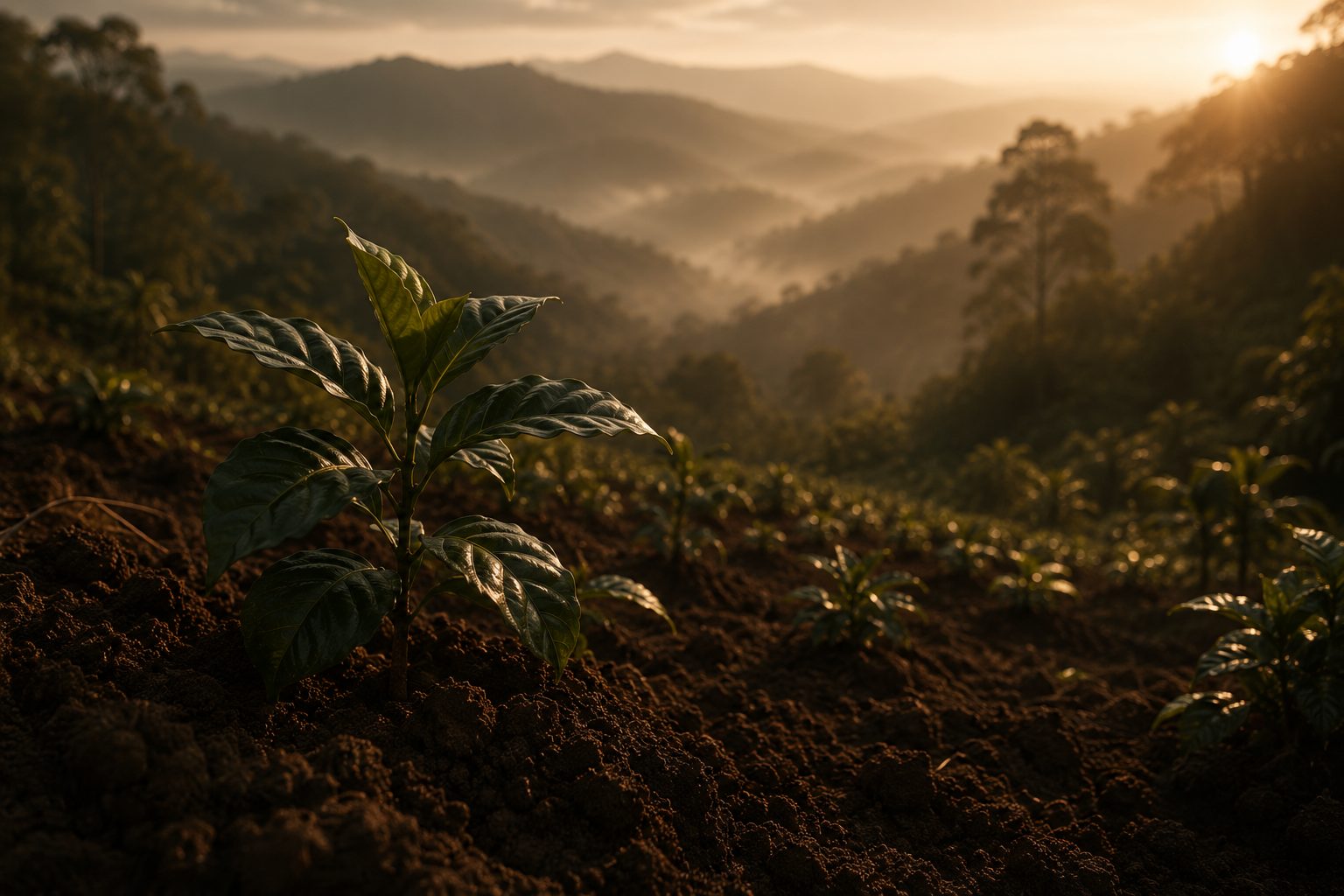
That directness is precisely what makes people ask what was done to it. The answer is not in the roastery. It is in the tank, months earlier and four thousand miles away.
Seal coffee cherry in a tank and the sugars in the mucilage stop being sugars and start being food. Yeasts and lactic acid bacteria consume them, and what they leave behind are esters, the same class of compound that makes a pear smell of pear.
Those esters do not sit on the outside of the seed. Parchment is porous and the seed is still alive, so they migrate inward and stay there through drying, through shipping, through the roast.
Time decides which organisms win. Twelve hours of fermentation gives clean acidity. A hundred and twenty gives something else entirely, because the population in the tank has changed several times over by then.
A coffee that tastes of fruit has not been flavoured. It has been fed.
A cup of coffee is roughly ninety-eight per cent water. In this city that water is desalinated or heavily treated, and both routes tend to arrive low in magnesium and high in alkalinity.
Magnesium is what pulls sweetness and body out of the grounds. Alkalinity does the opposite, buffering the acids that give a coffee its lift. Low magnesium and high alkalinity together produce a cup that is flat and slightly hollow, and no adjustment to grind or dose will recover it.
A still bottled water sitting somewhere between 75 and 150 ppm total dissolved solids will change your cup more than any equipment you can buy. It costs a few dirhams and takes no skill at all.
Before you blame the coffee, change the water.
Roasting leaves carbon dioxide trapped inside the bean, and it leaves slowly. While it is still leaving it pushes water away from the grounds, which is why very fresh coffee produces a thin, sour and stubbornly inconsistent cup.
Filter grinds settle in about seven days. Espresso, which is brewed under pressure and punishes any unevenness, generally wants ten to fourteen.
This is why we do not chase a roast date on the bag as though it were a freshness score. A bag roasted yesterday is not better than one roasted last week. It is simply not ready.
Give it a fortnight before you decide what you think of it.
Roast a coffee dark enough and it will taste of roast. The sugars caramelise past the point where the parcel is still legible, and what reaches the cup is the roaster's decision rather than the farm's. That is useful when the green is inconsistent, and wasteful when it is not.
So the maison range is roasted to reveal rather than to standardise, stopped short of the point where every origin begins to converge.
Le Comptoir, our counter blend, is roasted dark on purpose. It exists for all-day milk service, and milk needs body and crema more than it needs origin. Pretending otherwise costs a venue both money and consistency.
Light where the parcel deserves to be heard. Dark where the cup has a job to do.
A large roast batch has to be aimed at the middle of the drum. The beans at the edge take more heat than the ones at the centre, and the wider that gap, the more the profile has to be flattened so nothing scorches. Flattening is what makes a coffee taste of roast rather than of a farm.
Small lots close that gap. The batch behaves like one thing rather than an average of several, which is what makes it possible to stop early enough to keep the parcel legible.
Grind is the same argument at the other end. Espresso, filter and drip each want a different particle size, and a bag ground for one will underperform in the others. So we agree the roast level and the grind to the brew method, in writing, and hold every batch to that document.
Nothing here is unusual. It is simply done in small enough quantity to be done properly.

Notes are one thing. The cup is another. We bring the range to your counter, on your machine and with your water, and let the two sit side by side.
Request a tasting →For orders, trade and press. We reply personally.